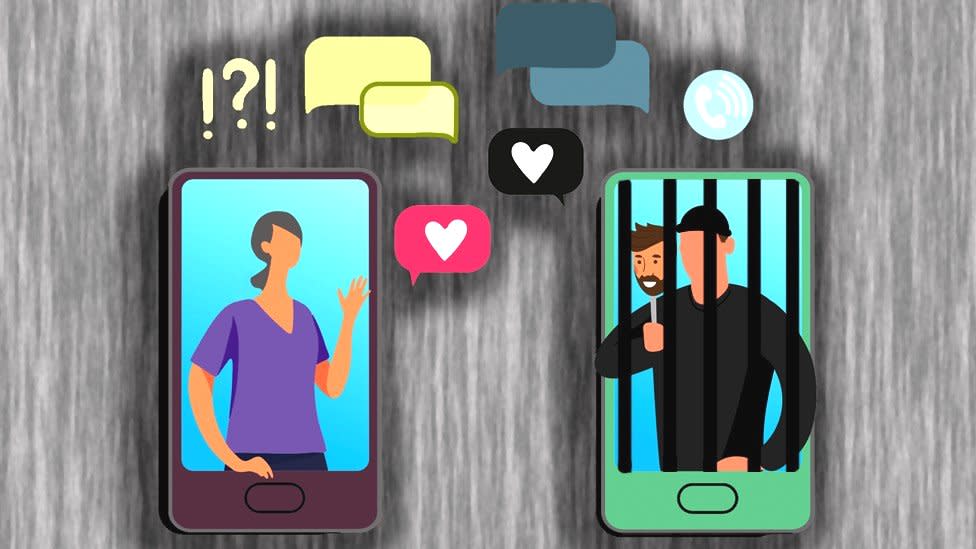
"It's one of the easiest ways to get money to be honest. If you've got a girl and she works and she's into you, why not ask her to send over money? Lawyers are the best obviously."
'It was work'
"It was a last resort kind of thing, I just saw how easy it was," Jamie says. "The most I ever got from a girl was £10,000... every week she was sending me £100, £200. "I've forgotten her name now, I don't see it as a relationship, I [saw] it as work." He says his accounts were blocked after the victims reported them, but he was never punished for the frauds. He says people using dating apps should watch out for men contacting them who are a lot younger or "better looking", who start asking for money, especially if they have never met in person. Jamie says he picked his targets by looking for those he thought likely to be lonely and lacking attention from others on the apps. His theory was that they would be more willing to "do anything" to avoid risk losing the connection. And he says he would use his real photographs, confident that his looks would help lure victims in. "I would go for older women and look for the desperation," he says. "Keywords would be like 'I just want happiness' or something like that. I'll act cool at the start and if she talks back then I know she's interested just from my pictures. "From then, that's when I start putting my game on, selling you dreams like 'I want a kid with you.' "[I] just say everything that she wants to hear until she's fallen in love." Until he felt that his victim was emotionally attached, Jamie said he wouldn't tell them he was in prison. He claims that he often messaged women for months, charming them before revealing the fact. When he did, he says he lied about the reason he was jailed, telling women it was for driving offences rather than violent crime.'He was charming'
In 2020, there were nearly 7,000 reports of so-called romance fraud. It cost victims almost £70m last year. And according to trade association UK Finance, there has been a 20% increase in bank transfers relating to romance fraud during the pandemic. Di Pogson, a 59-year-old widow, gave away her entire life savings of £40,000 to someone she met on a dating app. It turned out to be a scam. The man she'd fallen for did not really exist.
How to spot a scam

- they ask a lot of personal questions about you, but are not interested in telling you much about themselves
- they invent a reason to ask for your help, using the emotional attachment they have built with you
- your continued relationship with them depends on you sending them money
- their pictures look professional and/or glamorous -they may have been stolen from an actor or model